

Building backlinks is one of the more time-consuming parts of an SEO campaign. Finding websites that are relevant, trustworthy, and willing to publish content can take considerable research, especially when you’re managing multiple websites or client projects.
But there is a useful way to make this process more focused: study the websites already linking to your competitors.
Competitor backlink research helps you understand where other businesses in your industry are getting their links, what types of content attract those links, and which website owners may be open to similar collaborations.
Instead of approaching random websites and hoping for a response, you can use existing backlink patterns to identify more relevant opportunities.
In this guide, you’ll learn how to find competitor backlinks, evaluate potential linking websites, discover guest posting and link insertion opportunities, and turn your research into a practical link-building plan.
What Are Competitor Backlinks?
Competitor backlinks are links from external websites pointing to websites that compete with yours in search results.
For example, imagine you operate a website offering accounting software. Three other businesses are targeting similar customers and competing for related search terms.
If an industry publication links to one of those businesses through an educational article, product comparison, or contributor post, that link becomes a potential research opportunity.
You can investigate:
- Which website is linking to your competitor?
- What page contains the link?
- Why did the publisher reference that business?
- Is the linking website relevant to your industry?
- Could your website offer something valuable to the same publisher?
The objective isn’t to reproduce every backlink your competitors have. It’s to understand which publishing relationships, content formats, and industry websites could make sense for your own website.
Why Should You Research Competitor Backlinks?
Competitor backlink research can help you make better decisions before spending time on outreach.
Here are some practical benefits.
1. Discover Websites Already Publishing Industry Content
Finding relevant publishers from scratch can be difficult.
However, when you examine competitor backlinks, you may discover blogs, business publications, specialist websites, and industry resources that have already referenced similar businesses.
These websites can become potential prospects for your outreach campaigns.
2. Understand Which Content Attracts Links
Not every backlink comes from a guest article.
A competitor might receive links because of:
- Original research and industry reports
- Detailed educational guides
- Useful calculators and free resources
- Product comparisons
- Expert contributions
- Interviews and industry discussions
Understanding the reason behind a backlink helps you decide what type of content could make your own website worth referencing.
3. Find Guest Posting Opportunities
Some competitors receive backlinks from websites that regularly publish external contributions.
By examining the referring pages, you can identify publishers that accept industry-related articles.
This provides a more targeted starting point for guest posting outreach.
However, a website linking to a competitor doesn’t automatically mean it accepts guest contributions. Always review its publishing guidelines and editorial requirements.
4. Identify Link Opportunities Your Competitors Are Missing
Competitor research isn’t limited to copying existing link sources.
Suppose three competitors receive links from the same industry publication, but none has been mentioned by a respected resource website in your niche.
That gap could represent an opportunity to create something useful and approach the publisher with a relevant contribution.
Your research should help you discover both existing patterns and opportunities that competitors haven’t explored.
How to Find Competitor Backlinks Step by Step
You don’t need to start by collecting hundreds of website URLs. A structured research process will help you identify better opportunities and avoid wasting time.
Step 1: Identify Your Actual SEO Competitors
Start by identifying websites competing for the search terms and audience you want to target.
Remember that your business competitors and SEO competitors aren’t always the same.
For example, a small SaaS company might compete commercially with a few established software providers. However, its organic search competitors could also include comparison websites, industry blogs, and educational resources.
To identify SEO competitors:
- Search Google for your main industry keywords.
- Review websites appearing consistently in relevant results.
- Separate direct business competitors from informational publishers.
- Select three to five websites for your initial research.
Choose competitors that publish content for a similar audience rather than selecting websites simply because they have high authority metrics.
Practical tip: If you’re researching backlinks for a roofing company, start with businesses targeting similar roofing services and locations. A national technology publication is unlikely to provide a useful prospect for a local roofing campaign.
Step 2: Collect Their Main Website URLs
Once you’ve identified your competitors, create a simple spreadsheet.
Include the following columns:
| Competitor | Website | Main niche | Research status |
|---|---|---|---|
| Competitor A | example-a.com | Industry relevant | Pending |
| Competitor B | example-b.com | Industry relevant | Pending |
| Competitor C | example-c.com | Industry relevant | Pending |
These are illustrative entries, not actual competitor research results.
Keep your initial list manageable. Three to five competitors are usually enough to begin identifying patterns.
Step 3: Use Backlink Research Tools
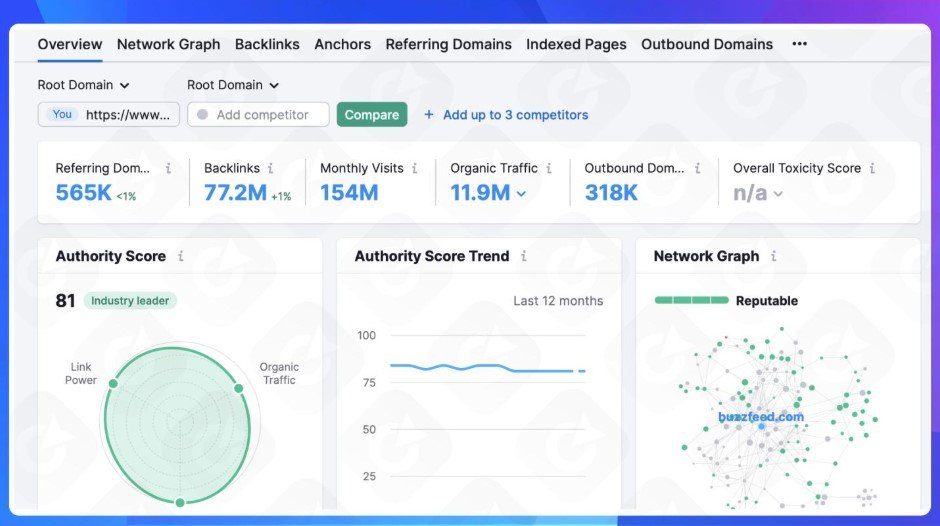
Backlink research tools can help you discover websites linking to a particular domain or page.
Some commonly used options include:
- Ahrefs Site Explorer
- Semrush Backlink Analytics
- Moz Link Explorer
- Majestic
- Free backlink checking tools
The available data and limits depend on the tool and subscription.
Enter a competitor’s domain into the research tool and open its backlink report.
Depending on the platform, you may be able to review:
- Referring domains
- Individual backlinks
- Linking page URLs
- Target pages
- Anchor text
- Link attributes
- Historical link changes
Don’t immediately export every result. Start by examining the websites and pages that appear most relevant to your industry.
A backlink report is a research starting point, not a ready-made outreach list.
Step 4: Examine the Pages Linking to Competitors
This is where the research becomes more valuable.
A referring domain tells you which website is linking to your competitor. The actual referring page helps you understand why that link exists.
Open selected linking pages and examine their content.
Look for:
- Contextual references inside educational articles
- Contributor biographies
- Expert interviews
- Resource lists
- Product recommendations
- Industry-specific guides
- Relevant business directories
For example, suppose a marketing blog links to a competitor inside an article about improving website visibility.
You should investigate whether the link supports an important point, references a useful resource, or promotes a business relationship.
That context helps you decide whether approaching the publisher would be worthwhile.
Step 5: Identify Guest Posting Opportunities

Guest posting is one possible route for building relationships with publishers discovered through competitor research.
Look for websites that publish content from external contributors.
Check their recent articles, author profiles, editorial guidelines, and contact pages.
You can also search Google using combinations such as:
- Your niche + “write for us”
- Your industry + “guest post guidelines”
- Your topic + “contribute an article”
- Your niche + “become a contributor”
- Your industry + “submit an article”
For example, a cybersecurity company could research technology publications that regularly feature articles about data protection, online security, and enterprise software.
Before contacting a publisher, check whether its audience and editorial standards are appropriate.
A website accepting submissions isn’t automatically a good backlink opportunity.
Step 6: Look for Relevant Link Insertion Opportunities
Not every publisher needs a new article.
Sometimes an existing article already discusses a subject related to your website, product, or resource.
This is where contextual link insertion research can be useful.
Consider the following example:
A website publishes an article about selecting project management software. Your competitor is already referenced in that article.
You can review the page and ask:
- Is there an important resource missing?
- Does your website provide information that would genuinely help readers?
- Is there a relevant section where your resource could add value?
- Does the publisher accept editorial updates or external references?
If your content offers something useful, you can contact the website owner or editor and explain why it may be worth considering.
Avoid requesting a link simply because a competitor already has one. Your suggestion should make sense for the existing article and its readers.
Step 7: Evaluate Every Potential Website
Finding backlinks is only one part of the process. You also need to decide whether a website deserves your attention.
Use a combination of quality checks rather than relying on a single SEO metric.
Check topical relevance
Does the website regularly publish content related to your industry?
A relevant website with a smaller audience may be more useful than a larger website covering completely unrelated subjects.
Review organic traffic
Look at available organic traffic estimates and examine whether the website appears to attract an audience.
Third-party traffic estimates are not exact measurements, so treat them as indicators rather than verified figures.
Examine website content
Read a few recent articles.
Check whether they provide useful information, have consistent editorial standards, and appear to serve a genuine audience.
Review outbound links
Look at the websites being referenced.
If nearly every article contains unrelated commercial links, this could indicate poor editorial standards or an overly promotional publishing model.
Check backlink patterns
Review whether the website receives links from relevant sources and whether its backlink profile appears natural.
Consider audience and location
For a US-focused campaign, a publication reaching the relevant American audience may be more suitable than a website with an unrelated geographical audience.
A practical evaluation checklist is more useful than accepting a website simply because its DA or DR looks attractive.
Step 8: Organize Your Prospects and Start Outreach

After evaluating the websites, organize your selected prospects into a separate spreadsheet.
You can use the following structure:
| Field | Information to record |
|---|---|
| Website | Publisher’s domain |
| Niche | Main content category |
| Competitor link | Relevant referring page |
| Opportunity type | Guest post or link insertion |
| Traffic | Estimated organic traffic |
| DA / DR | Available authority metrics |
| Contact | Editor or website owner |
| Status | Not contacted, contacted, replied |
| Notes | Requirements and observations |
Prioritize websites based on relevance, editorial quality, audience, and campaign requirements.
When contacting publishers, write a personalized message. Mention the relevant article or topic rather than sending the same generic request to every website.
A thoughtful outreach email is more useful than a large list of unqualified prospects.
How to Find Competitor Backlinks Without Expensive Tools
Paid tools can provide useful backlink data, but smaller businesses and beginners may not always have access to premium subscriptions.
You can still conduct useful preliminary research through manual methods.
Use Google Search Operators
Google can help you find potential publishing websites and existing industry content.
Try searches such as:
"your niche" "write for us""your industry" "guest contribution""your topic" "submit an article""your niche" "contributor guidelines"
You can also search for specific competitor names alongside industry-related terms to discover interviews, mentions, and published contributions.
These searches don’t provide a complete backlink profile, but they can reveal useful publishing opportunities.
Explore Competitor Author Profiles
Visit competitor websites and review their author biographies.
Some businesses publish articles on external websites and reference those contributions in their team profiles or media sections.
Search for an author’s name together with the competitor’s brand or website.
This can reveal publications where the competitor’s team has previously contributed.
Check Industry Resource Pages
Many websites maintain resource pages containing useful industry publications, tools, businesses, and educational references.
Search for resource pages in your niche and evaluate whether your website has something genuinely useful to contribute.
Remember that these are potential opportunities, not guaranteed backlink placements.
Common Mistakes to Avoid During Competitor Backlink Research
Even a large backlink report can produce poor results if the research is handled incorrectly.
Here are some mistakes worth avoiding.
Focusing Only on DA and DR
Domain Authority and Domain Rating can help with preliminary comparisons, but neither metric independently establishes website quality.
A relevant publication with genuine readership can be more valuable to your campaign than an unrelated website with higher authority metrics.
Copying Every Competitor Backlink
Some competitor backlinks may come from old directories, unrelated websites, automatically generated pages, or other sources that aren’t suitable for your campaign.
Review each opportunity individually.
Ignoring the Linking Page
A domain may look relevant, but the specific article containing the backlink could be unrelated.
Always inspect the actual referring page before adding a website to your prospect list.
Sending Generic Outreach Emails
Publishers receive many requests.
An email that doesn’t mention their website, content, or audience gives them little reason to consider your proposal.
Personalize your message and explain the potential value of your contribution.
Ignoring Editorial Quality
Getting a placement should never be the only objective.
Review the website’s publishing standards, outbound links, content quality, and audience before moving forward.
Also make sure paid or sponsored placements are handled with appropriate link qualification and disclosure.
Google explains this in its guidance on how to qualify outbound links.
Turning Competitor Research Into a Long-Term Link Building Strategy
Competitor backlink research becomes more useful when you treat it as an ongoing process rather than a one-time activity.
Start with a small group of relevant competitors and review their backlink profiles periodically.
When you discover a potential publisher, record the referring page, opportunity type, contact information, and your evaluation notes.
Then divide your prospects into practical categories:
- Websites suitable for guest contributions
- Publishers with relevant existing articles
- Industry publications for expert contributions
- Resource pages and educational websites
- Potential collaboration partners
This approach makes it easier to plan outreach and identify which opportunities deserve attention first.
For SEO agencies managing multiple clients, the same research framework can be adapted to different niches. A technology client may need SaaS publications, while a home improvement business may benefit more from relevant construction and property websites.
The important part is matching every opportunity to the client’s audience, campaign objectives, and budget.
At this stage, quality research and consistent publisher communication matter more than simply increasing the number of websites in a spreadsheet.
Final Thoughts
Finding competitor backlinks is not about collecting as many referring domains as possible. It’s about understanding why other websites receive links, identifying relevant publishers, and finding opportunities that genuinely make sense for your own website.
Start by selecting suitable SEO competitors, examining their referring pages, and organizing potential publishers into a well-researched prospect list.
Then evaluate each website based on relevance, editorial standards, audience, and the value it can provide to your campaign.
Whether you’re managing your own website or handling SEO campaigns for multiple clients, a structured research process can make link-building decisions more focused and outreach more productive.
The best opportunities are not necessarily the websites with the biggest numbers. They are the ones where your content, audience, and publishing opportunity genuinely fit together.

Leave a Reply