

Finding quality guest posting websites is an important part of building an effective link-building strategy. However, discovering websites that accept guest contributions is only the first step. The real challenge is identifying relevant publishers, evaluating website quality, comparing placement prices, and finding opportunities that fit your campaign goals and budget.
Many SEO professionals maintain large databases of potential publishers, but having thousands of websites does not necessarily mean having a strong outreach network. Some websites are listed on multiple guest posting marketplaces, while others work directly with website owners and may not appear on popular platforms.
Understanding these differences can help businesses and outreach professionals discover new publishers, avoid unnecessary expenses, and make more informed decisions when planning guest posting campaigns.
In this guide, we will explore practical ways to find unique guest posting sites, check their marketplace availability, compare prices, evaluate website quality, and build a reliable publisher database.
Learning how to find guest posting sites takes more than searching for websites that accept articles. You also need to evaluate niche relevance, content quality, website traffic, editorial standards, and pricing before choosing a publisher.
What Are Guest Posting Sites?
Guest posting sites are websites that accept articles or contributions from external writers, businesses, industry professionals, and content creators. Depending on their editorial policies, these publications may accept educational articles, expert insights, industry commentary, and other useful content relevant to their audiences.
For digital marketers and SEO professionals, guest contributions can provide opportunities to introduce a brand to new readers, build industry relationships, and earn relevant editorial links when permitted by the publisher.
However, not every website advertising guest posting opportunities offers the same value. Some publishers maintain strong editorial standards and serve a clearly defined audience, while others publish large amounts of unrelated content primarily to sell placements.
The goal should be to find publishers that offer genuine relevance, useful content, and a suitable environment for your brand.
What Makes a Guest Posting Website Unique?
The term “unique guest posting site” can refer to a website that is not listed on the marketplaces you have checked, a publisher that is difficult to discover through conventional research, or a website that offers a distinct audience within a particular niche.
A website does not need to be completely unknown to provide value. Its relevance, editorial standards, audience, and suitability for your campaign are often more important than whether other agencies have discovered it.
Websites Not Listed on Common Marketplaces
Some publishers advertise their services through guest posting marketplaces, while others work directly with businesses, agencies, and outreach specialists.
A website that does not appear in your checked marketplace databases may represent a new opportunity for direct outreach. However, the absence of a listing does not automatically prove that the publisher is exclusive or completely undiscovered.
Publishers With a Specific Niche
A website can also stand out because it serves a particular audience.
For example, a roofing company may benefit more from a relevant construction or home improvement publication than from a general website that covers unrelated subjects.
Specialist publishers can be valuable because their content aligns more closely with the topics and interests of the intended audience.
Websites With Direct Publisher Relationships
Some website owners prefer to handle inquiries directly rather than list their websites on multiple platforms.
Building relationships with these publishers can help outreach professionals discover additional opportunities, negotiate suitable terms, and maintain a more differentiated publisher database.
Nevertheless, every website should be assessed on its own merits rather than being considered valuable simply because it is not widely advertised.
How to Find Guest Posting Sites

Finding relevant publishers requires a combination of search techniques, marketplace research, and direct outreach. Using multiple methods can help you discover opportunities that a single source might miss.
1. Use Google Search Operators
Google can help you discover websites that accept contributed articles or invite submissions from external writers.
Try searches such as:
- “write for us” + your niche
- “guest post guidelines” + your niche
- “submit an article” + your niche
- “contribute to our blog” + your niche
- “become a contributor” + your niche
For example, someone searching for home improvement publishers could try:
"write for us" "home improvement"
For construction-related opportunities, try:
"guest post guidelines" construction
These searches can uncover contributor pages, editorial guidelines, and websites that do not actively advertise their guest posting opportunities on marketplaces.
Review each website carefully because accepting editorial contributions does not necessarily mean the publisher offers paid guest posts.
2. Research Websites in Your Target Niche

Start by defining the industry, audience, and topics relevant to your campaign.
For example:
- Technology businesses can research software, cybersecurity, SaaS, and business technology publications.
- Home improvement companies can explore roofing, renovation, construction, and property websites.
- Health businesses can research relevant health and wellness publications with appropriate editorial standards.
Look beyond the homepage. Review published articles, categories, author profiles, editorial guidelines, and the consistency of the website’s subject matter.
A relevant publisher with useful content can be a better prospect than a website selected exclusively because of its authority metrics.
3. Explore Guest Posting Marketplaces
Guest posting marketplaces connect publishers with advertisers, agencies, and businesses seeking content placements.
Depending on the platform, you may find information about website metrics, advertised prices, publication requirements, and available placement options.
These platforms can help you identify publishers and compare offers, but their inventories are not necessarily identical. A website listed on one marketplace may be absent from another.
Marketplace listings should therefore be treated as research sources rather than complete records of every available publisher.
4. Find Publishers Through Direct Outreach
Direct outreach is another effective way to discover guest posting opportunities.
Once you identify a relevant website, review its content and determine whether your proposed article would be useful to its readers. Contact the publisher or editor with a clear inquiry about contribution guidelines and available opportunities.
Depending on your campaign, you may also need to confirm pricing, content requirements, publication timelines, and link policies.
Over time, these conversations can help you develop direct publisher relationships and maintain a more organized database of potential opportunities.
How to Check Whether a Website Is Listed on Guest Posting Marketplaces
If you regularly research publishers, checking their marketplace availability can help you understand how their advertised prices compare across different platforms.
Some publisher research tools provide a price-finding feature that searches multiple supported marketplace databases. These tools can make it easier to identify existing listings and compare available offers.
Before relying on a tool, check which marketplaces it covers, whether the information is current, and whether the relevant features require a paid subscription.
Step 1: Prepare Your Website List
Create a spreadsheet containing the websites you want to investigate.
Useful fields include:
- Website URL
- Website niche
- Domain Authority (DA)
- Domain Rating (DR)
- Estimated organic traffic
- Marketplace availability
- Lowest advertised price
- Highest advertised price
- Direct publisher contact
- Last verification date
Keep website URLs consistent to reduce duplicate records and make it easier to compare results.
Step 2: Search for Each Website
Open your chosen publisher research or price comparison tool and enter the domain you want to investigate.
If the platform supports bulk searches, you may be able to check multiple websites in one session. The available number of searches may depend on the platform and subscription.
Review the returned listings and record the marketplaces where the website appears.
Step 3: Compare Marketplace Offers
Suppose a hypothetical website appears on three marketplaces at the following prices:
| Marketplace | Advertised price |
|---|---|
| Marketplace A | $45 |
| Marketplace B | $60 |
| Marketplace C | $85 |
In this example, the lowest advertised price is $45 and the highest is $85.
However, these figures should not be compared blindly. One offer may include content writing, while another may require you to supply the article. Publication terms, link attributes, editing fees, and other conditions can also differ.
Confirm that the offers cover equivalent services before deciding which one provides the best value.
Step 4: Investigate Websites With No Results
If a website returns no marketplace listings, record it as “not found in the checked databases.”
This result may indicate that the publisher is not listed on the platforms covered by the tool. It may also reflect incomplete database coverage, an alternative domain format, a recently added listing, or a search limitation.
Search for the domain manually, explore other relevant marketplaces, and check the publisher’s official website.
If no listings are found after reasonable checks, the website may be a useful prospect for direct outreach. Its quality and suitability must still be evaluated separately.
How to Estimate a Fair Guest Posting Price
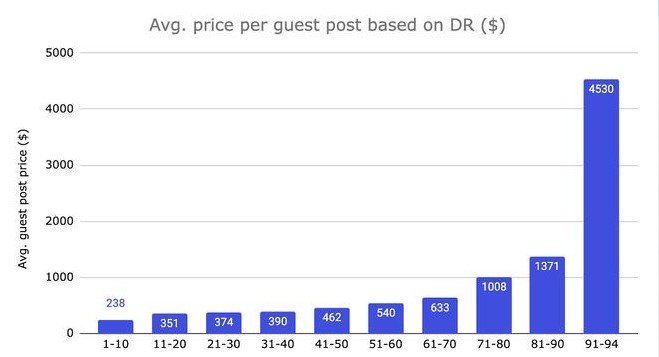
Publisher prices can vary according to niche, website quality, audience, editorial requirements, placement type, and the services included in an offer.
For agencies managing several campaigns, understanding these differences can help keep recommendations aligned with client budgets.
Compare Current Advertised Prices
Suppose a website is advertised for $45 on one platform and $70 on another.
These listings provide a starting point for price research, but they do not guarantee that the publisher will accept a direct order at the lower rate.
Check whether both listings are current and whether they offer the same type of placement. Then contact the publisher to ask about direct pricing or discounts for multiple placements.
Evaluate the Website’s Overall Value
Before agreeing on a price, consider:
- Topical relevance to your client’s industry
- Quality and originality of published content
- Organic search visibility and traffic trends
- Audience relevance
- Editorial standards
- Placement type and link policy
- Content creation and editing requirements
- Publication terms and long-term availability
Third-party metrics such as DA and DR can help with preliminary research, but they are not Google ranking scores and should not be the only criteria used to evaluate a publisher.
Negotiate Professionally
When contacting a publisher, explain your requirements clearly and ask about the available options.
If you are planning several placements, ask whether a suitable package rate is available. If the quoted price exceeds your budget, you can politely request a more competitive offer.
Professional negotiations should consider the publisher’s services and the value of the opportunity rather than relying solely on the cheapest price found elsewhere.
How to Evaluate Guest Posting Websites Before Buying a Placement
A website can be absent from popular marketplaces and still be a poor choice. Before recommending a publisher to a client, review its content, relevance, visibility, and publishing practices.
Check Topical Relevance
Determine whether the website regularly publishes content related to your target niche.
A relevant publication may help your brand reach readers who are interested in your products, services, or expertise. A website covering unrelated subjects may offer little practical value, regardless of its authority metrics.
Review Organic Traffic and Search Visibility
Use reliable SEO tools to examine estimated organic traffic, ranking keywords, and historical trends where available.
Look for unexplained declines, suspicious traffic patterns, or a mismatch between the website’s claimed performance and its visible content.
Remember that third-party traffic estimates are not exact analytics data. Treat them as indicators for further investigation rather than definitive proof of performance.
Examine Content Quality
Read several recently published articles rather than judging the website by its homepage alone.
Look for useful information, clear writing, appropriate sources, consistent editorial standards, and a logical category structure.
Be cautious when a website publishes large volumes of unrelated sponsored content, thin articles, or material that appears designed primarily to sell links.
Understand Paid Links and Editorial Policies
Before arranging a placement, ask how the publisher handles sponsored content and outbound links.
Google recommends using rel="sponsored" or rel="nofollow" for paid links, as appropriate. Buying links primarily to manipulate search rankings can violate Google’s spam policies.
A placement should not be considered valuable simply because it promises a dofollow link. Focus on relevant content, genuine audience value, transparent sponsorship practices, and appropriate link qualification.
How to Build a Reliable Guest Posting Website Database

A well-maintained publisher database helps outreach teams avoid duplicate research, track negotiations, and make informed recommendations to clients.
Consider using a spreadsheet or database with the following fields:
| Field | Purpose |
|---|---|
| Website URL | Identifies the publisher |
| Niche | Records topical relevance |
| DA and DR | Stores third-party authority metrics |
| Organic traffic | Records estimated search visibility |
| Marketplace listings | Tracks where offers were found |
| Lowest verified price | Supports price comparisons |
| Contact details | Organizes publisher communication |
| Placement type | Separates guest posts from link insertions |
| Quality review | Records editorial and traffic checks |
| Last checked | Helps keep information current |
Update the database whenever a price changes, a publisher stops accepting submissions, or new information becomes available.
Avoid presenting outdated prices or traffic figures as current. A reliable database is valuable because its information is organized, relevant, and regularly verified.
Common Mistakes to Avoid When Finding Guest Posting Sites
Choosing websites only by DA or DR: These third-party metrics do not establish that a website is relevant, trustworthy, or capable of improving search performance.
Assuming an unlisted website is automatically unique: A missing result only indicates that the website was not found in the databases checked.
Selecting the cheapest offer automatically: Consider the actual services, content quality, editorial requirements, and placement terms before deciding.
Ignoring existing content: A website publishing unrelated or low-quality articles may be unsuitable even if its metrics appear attractive.
Failing to verify prices: Marketplace offers can change, and advertised prices may differ from direct publisher terms.
Building links solely to manipulate rankings: Paid link schemes intended to influence search rankings can create SEO risks. Prioritize useful content, relevant audiences, and compliant link practices.
Frequently Asked Questions
How can I find unique guest posting sites?
Use niche-specific Google searches, explore relevant publications, compare available marketplace listings, and contact publishers directly. Check multiple sources before describing a website as unlisted or unique.
How can I check whether a website is listed on guest posting marketplaces?
Use a publisher search or price comparison feature if available. Record the platforms checked and the date of the search. A result from one database does not confirm availability across every marketplace.
Is a website with no marketplace listing more valuable?
Not necessarily. An unlisted website may provide a new outreach opportunity, but its quality, relevance, search visibility, editorial standards, and pricing still need to be assessed.
How should I decide what to pay for a guest post?
Compare current offers for equivalent services, review the publisher’s quality and relevance, and consider content creation and editing requirements. Use marketplace prices as reference points rather than guaranteed direct rates.
Are DA and DR enough to judge a guest posting website?
No. DA and DR are third-party metrics. Review them alongside estimated organic traffic, content quality, topical relevance, publishing practices, and overall credibility.
Is guest posting still useful for SEO?
Guest contributions can support brand awareness, audience development, and relevant editorial exposure. However, guest posting used primarily to create links at scale for ranking manipulation can violate Google’s spam policies. Editorial value and the purpose of the campaign matter.
Conclusion
Finding valuable guest posting websites requires more than collecting domains or comparing authority metrics. A reliable process combines niche research, marketplace checks, direct publisher outreach, price comparisons, and careful website evaluation. Following Google’s guidance on creating helpful content can help you focus on useful, people-first information.
Publisher research tools can help identify advertised offers and discover websites that may not appear in the databases you check. However, their results should be treated as research references rather than complete records of every publisher.
At Zenith Reach Agency, an organized approach to publisher research helps identify opportunities based on relevance, placement requirements, and client budgets. By evaluating each website carefully, maintaining accurate pricing information, and developing direct publisher relationships, agencies can make more informed decisions about their link-building campaigns.

Leave a Reply