

White label link building services solve one of the hardest problems in agency life: clients want backlinks, but building links in-house is slow, expensive, and hard to staff. A white label partner does the outreach, placement, and reporting under your brand — your clients see your agency’s work, and you keep the margin.
Done well, white label link building is one of the most profitable services an agency can add. Done badly, it is how agencies lose clients: late deliveries, low-quality links, and reports that fall apart under scrutiny. This guide covers how the model works, what it costs, how to price it, how to vet a partner, and the mistakes that sink most first-time resellers.
What White Label Link Building Is
White label link building means outsourcing the fulfilment of link building campaigns to a specialist provider, who delivers the work under your agency’s brand. The provider finds publishers, runs outreach, places links, and produces reports with your logo and your company name. Your client never sees — or needs to see — the partner behind the work.
This is different from simply buying links from a marketplace. A marketplace sells you individual placements; a white label partner runs campaigns: strategy, prospecting, outreach, content, placement, verification, and reporting, month after month, across your whole client roster.
The model exists because link building is genuinely hard to staff. According to Authority Hacker’s 2024 survey, 65% of marketers say link building is the hardest part of SEO. An in-house link builder costs $60,000 or more a year in salary alone, before tools and management — and one person can only run so many campaigns. A white label partner gives you an entire outreach team for less than one hire.
How It Works in Practice
A typical white label engagement runs like this:
- You sell the service. Link building appears on your services page and in your proposals, priced at your rates. The client contracts with you, not with the partner.
- You brief the partner. For each client, you share target URLs, anchor preferences, niche requirements, and any brand guidelines. Good partners will push back if a brief is unrealistic — that is a feature, not a flaw.
- The partner builds the links. Prospecting, outreach, content, and placement happen on the partner’s side, on an agreed timeline. Turnaround is usually two to six weeks per batch of placements.
- You receive a white label report. Live URLs, anchor text, placement dates, and host-site metrics — formatted with your branding, ready to send to the client as-is.
- You handle the client relationship. Strategy calls, upsells, and renewals stay with you. The partner stays invisible.
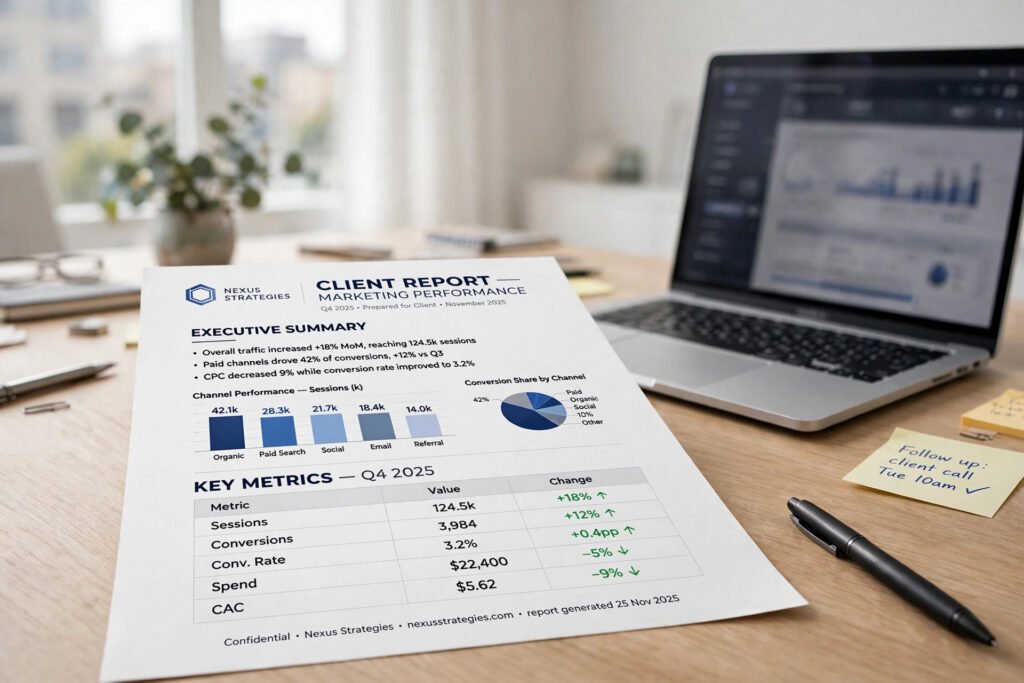
The key detail is step 4. A report your client can forward to their boss without embarrassment is the difference between a partner and a vendor. Ask to see a sample report before you sign anything — it tells you more about a provider than any sales call.
What White Label Link Building Services Cost — and What to Charge
Wholesale link costs depend on the same factors as retail: host site authority, traffic, and niche. As a rough guide for 2026, wholesale prices for a white label partner typically run:
- Standard placements (DR 30–50, real traffic): $80–$200 per link wholesale
- Premium placements (DR 50–70): $200–$500 per link wholesale
- Top-tier placements (DR 70+): $500–$1,000+ per link wholesale
For context, published market data puts the median retail guest post at $156, and $215 for DR 40–59 sites, based on Serpbays’ analysis of 24,310 live listings in November 2026. Wholesale rates should sit below retail — if they do not, you are not getting a partner price.
Pricing your service. Most agencies mark up white label links by 50–100%, or bundle them into monthly retainers. A common structure:
- Starter package: 5 links/month, $1,500–$2,500/month retail
- Growth package: 10 links/month, $2,500–$5,000/month retail
- Scale package: 20+ links/month, $5,000–$10,000/month retail
Your margin needs to cover not just the wholesale cost but also your time: client communication, strategy, reporting review, and the occasional replacement request. Price too low and the service becomes a loss-maker the first time a client asks a hard question. A 30–50% gross margin is a healthy target for a resold service.
How to Vet a White Label Partner
This is the most important section in this guide. Your reputation rides on your partner’s work, and your client will blame you — not the partner — when something goes wrong. Vet thoroughly before your first order.
Check real placements, not promises. Ask for live sample URLs from recent campaigns. Open them. Check the host sites in Ahrefs or Semrush: real traffic, real content, real audience. If the partner will not share samples, stop there.
Check their vetting standards. A serious partner has written standards: minimum organic traffic, topical relevance requirements, indexing checks, and outbound link limits. Ask what their minimum traffic threshold is and how they check it. “We check DR” is not an answer.
Check content quality. If the partner writes guest posts, read a sample. It should read like an article a human editor would publish — because a human editor did. Thin, generic, or obviously AI-generated content without editing will get rejected by good publishers and ignored by Google.
Check the report. Request a sample white label report. It should include live URLs (not just domains), anchor text, placement dates, and host metrics — and it should look professional enough to send to a client without editing. A spreadsheet of domains is not a report.
Check turnaround honesty. Ask how long a batch of 10 links takes, and what happens when a placement is delayed. Honest answers include ranges and caveats. A partner who promises exact dates for outreach work is either inexperienced or overselling.
Check the replacement policy. Links get removed. Ask what happens then, and for how long replacements are covered. Six months is a good standard; twelve months is excellent.
Start small. Run one small campaign for one client before committing your whole roster. A trial order of 5 links tells you more than ten sales calls.
The Mistakes That Sink First-Time Resellers
Selling links your partner cannot deliver. Do not promise a client “20 DR 60+ links a month” before checking that your partner can supply them in that client’s niche. Niche matters: finance and legal links are harder and slower to earn than e-commerce or home improvement links.
Hiding the process from clients entirely. White label does not mean secret. Clients should understand what link building involves, roughly how long it takes, and what the risks are. An educated client renews. A client who was promised “page one in 30 days” churns — and leaves a bad review.
Competing on price alone. If your only pitch is “cheapest links,” you will attract clients who leave for the next cheapest provider. Compete on reporting quality, strategy, and reliability instead.
Not reviewing reports before sending them. Always open the report and spot-check a few links before it goes to the client. A dead link or a wrong anchor in a client-facing report costs more trust than any single placement is worth.
Ignoring anchor strategy. Your partner should manage anchors across the campaign: mostly branded and natural, a minority partial-match, very few exact-match. If your partner lets a client dictate exact-match anchors on every link, that partner is creating risk for your client’s site — and for your relationship with them.
White Label and Google’s Policies
Any agency reselling links needs to understand the policy landscape, because your clients may ask. Google’s spam policies define link spam as creating links primarily to manipulate rankings, including buying or selling links for ranking purposes. Paid links for advertising or sponsorship are acceptable when qualified with rel="nofollow" or rel="sponsored".
The white label industry operates in the space between editorial outreach and paid placement, and the providers who last are the ones who keep their work as editorial as possible: real sites with real readers, genuinely useful content, relevant links, and natural anchors. When you vet a partner, ask them directly how they approach this. Their answer tells you whether they are building something durable or something that depends on not being caught.
You should also be honest with your clients about timelines. Links typically take weeks to show effect, and competitive keywords take months of consistent work. An agency that sets honest expectations keeps clients for years. An agency that overpromises replaces them every quarter.
Is White Label Right for Your Agency?
White label link building fits agencies that:
- Already sell SEO and want to add link building without hiring
- Have more client demand than their team can fulfil
- Want predictable monthly costs instead of salary overhead
- Are comfortable managing the client relationship while someone else fulfils
It fits less well if your agency’s core pitch is “everything done in-house by our own team” — in that case, be honest about the tension before you outsource. And it does not suit agencies that want total control over every email sent in their name; white label requires trusting a partner’s outreach process.
One final consideration: your partner is a business relationship, not a supplier. The best white label arrangements last years because both sides invest in the relationship — the partner learns your clients’ niches, and you give them consistent volume and clear briefs. Treat it that way from the start.
The Bottom Line
White label link building services let an agency offer a service clients want, without the cost and complexity of building an outreach team. The model works when you choose a partner on evidence — real placements, real standards, real reports — and price the service to leave room for your own work.
Start with a trial campaign, review the first report carefully, and scale only when the quality holds. Your clients will never know who built their links. They will know whether the links worked — and whether your agency is the one they trust to build them.
If you run an agency and want to see how a white label partnership works in practice, read our guide to white label link building for UK SEO agencies or our playbook on scaling link building for SEO agencies.




Leave a Reply