
SEO link building services exist for a simple reason: most content never gets seen. Ahrefs studied around 14 billion pages and found that 96.55% of them get zero traffic from Google, and another 1.94% get between one and ten visits a month. One of the biggest reasons is that the pages have no backlinks at all. A good provider helps you earn the links your pages need to compete. A bad one can cost you money, time, and in the worst case, your rankings.
This guide explains what these services actually do, how to judge a provider before you pay, what fair pricing looks like, and the red flags that should make you walk away. It is written from the perspective of people who run outreach campaigns every day — including the honest parts most sales pages leave out.
What SEO Link Building Services Actually Do
At their core, SEO link building services find websites in your niche, contact their editors or owners, and secure a link back to your site. The work breaks down into four stages:
- Prospecting. The provider builds a list of websites that are relevant to your niche, have real organic traffic, and are indexed in Google. Quality matters far more than list size. A list of 50 genuinely relevant sites beats a database of 5,000 random blogs.
- Outreach. Someone — a real person, not a bot — emails editors and webmasters with a specific, relevant pitch. Personalised outreach gets replies; mass templates mostly get ignored or marked as spam.
- Placement. The link goes live either inside a new guest article written for the host site, or inserted into an existing article that already ranks (a niche edit, also called a link insertion).
- Reporting and verification. You receive the live URL, the anchor text used, and the host site’s metrics. A serious provider also checks that the link is dofollow, indexed, and still live weeks later.
That is the whole job. Anything a provider offers beyond this — keyword research, anchor strategy, competitor gap analysis — is either a bonus or a way to justify a higher price. Judge the core first.
Why Backlinks Still Matter in 2026
It is fair to ask whether links still matter, given how much Google has changed. The evidence says yes — with an important caveat.
Backlinko’s analysis of 11.8 million Google search results found that the page ranking in position one has, on average, 3.8 times more backlinks than the pages in positions two to ten. Ahrefs’ own research found that pages with no backlinks almost never earn meaningful traffic: of roughly 20 million pages with no referring domains in its index, only 2,997 get more than 1,000 search visits a month. That is about 1 in every 6,671 pages.
The caveat is that correlation is not causation. Strong pages tend to earn links and rank well, and Google’s own spokespeople have said links are not even in the top three ranking factors anymore. Links are one signal among many — content quality, relevance, and user satisfaction matter at least as much. But for competitive keywords, it is still almost impossible to reach page one without them. That is the honest position: links are necessary, not sufficient.
The Three Main Types of Service
Most providers sell one or more of these three things. Knowing the difference helps you buy the right one.
Guest posting
A new article is written and published on a third-party site in your niche, with a contextual link back to your page. Guest posts give you control over the topic, the anchor text, and the surrounding content. They are the best choice when you want to build topical authority or target a specific keyword with a dedicated article. The trade-off is time: writing, pitching, and publishing typically takes two to six weeks per placement.
Link insertions (niche edits)
Your link is added to an article that already exists, is already indexed, and often already ranks. Because the host page already has Google’s trust, the ranking effect usually arrives faster than with a guest post. Insertions are the better choice when you need links quickly or want to strengthen an existing page. The trade-off is less control: the anchor has to fit a sentence that already exists.
Digital PR and earned links
Original research, data studies, tools, or genuinely newsworthy stories that journalists and bloggers link to on their own. These are the most valuable links you can get — and the hardest to produce on demand. If a provider promises a fixed number of “earned” links per month, be sceptical. Earned links cannot be ordered like inventory.
Many campaigns use a mix: guest posts for topical coverage, insertions for speed, and the occasional PR push for authority. A provider that only sells one type is not necessarily bad, but ask why.
How to Judge a Provider Before You Pay
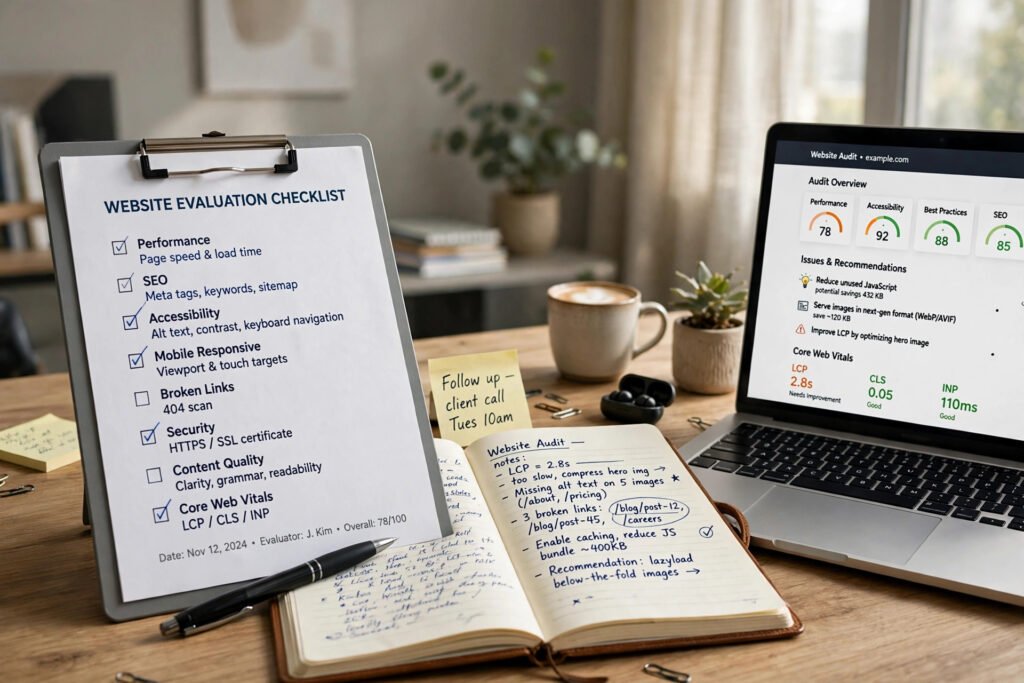
Use this checklist in your first conversation with any provider. Their answers tell you almost everything.
Ask to see sample placements. Not a list of domain names — actual live URLs of links they have placed. Open them. Is the host site real? Does it have recent content, real traffic, and an audience? Or does every article look like it was written to host a link? If a provider will not show samples before you pay, walk away.
Ask how they vet sites. A good answer mentions real organic traffic (checked in Ahrefs or Semrush), topical relevance, indexing status, and outbound link quality. A bad answer is “we only use DA 50+ sites.” Domain Authority is a third-party estimate, not a Google metric, and it is easy to manipulate. A DR 70 site with no traffic is worth less than a DR 35 site your customers actually read.
Ask who writes the content. Guest post content should be written by a human who understands the topic, for the host site’s readers — not spun, not AI-dumped without editing. Ask to read a sample article.
Ask about anchors. A trustworthy provider will talk about anchor diversity: mostly branded and natural anchors, a minority of partial-match anchors, and very few exact-match anchors. A provider that lets you use exact-match commercial anchors on every link is setting you up for a penalty.
Ask about replacements. Links get removed. Sites get redesigned. A professional provider offers a replacement guarantee — typically three to twelve months — and honours it without an argument.
Ask how they report. You should get live URLs, anchor text, placement dates, and host-site metrics for every link. A PDF with a domain list and no URLs is not reporting.
What SEO Link Building Services Cost in 2026
Prices vary enormously, and the averages hide the real picture. Ahrefs’ research into buying links found an average cost of $361.44 per link, while an Authority Hacker survey of 755 link builders put the average paid link at $83 — the difference comes from the mix of link types and site quality in each sample. A guest post placement averaged around $77.80 in the Ahrefs data.
Marketplace data tells a similar story. Serpbays analysed 24,310 live guest post listings in November 2026 and found a median price of $156, rising to $215 for DR 40–59 sites. Sites with 10,000 to 100,000 monthly organic visits had a median price of $217.
What should you actually budget? As a rough guide:
- Low-tier placements (DR 20–40, modest traffic): $70–$150 per link
- Mid-tier placements (DR 40–60, real traffic): $150–$400 per link
- High-tier placements (DR 60+, strong traffic): $400–$1,000+ per link
- Managed monthly campaigns: $2,000–$10,000 per month depending on volume and quality
Be wary of prices that look too good. A “DR 70 guest post” for $30 is almost certainly a hacked site, a link farm, or a subdomain trick — a small subdomain inheriting the authority of a big domain. The link will not help you, and it may hurt you.
The Google Policy Question You Should Ask
Here is the part many providers avoid. Google’s spam policies define link spam as creating links primarily to manipulate search rankings, and that explicitly includes buying or selling links for ranking purposes. Google does accept that buying and selling links is a normal part of the web economy for advertising and sponsorship — but those links should carry a rel="nofollow" or rel="sponsored" attribute.
So where does that leave link building services? The honest answer is that the industry operates in a grey area, and the providers who last are the ones who stay as close to the editorial side of the line as possible: real sites, real readers, genuinely useful content, relevant links that a reader would find helpful, and natural anchor text. What gets sites penalised is scale without relevance — hundreds of links from sites that exist only to sell them, all with keyword-rich anchors.
When you hire a provider, ask them directly how they stay on the right side of that line. A good provider will give you a straight answer about relevance, editorial standards, and anchor diversity. A provider who says “Google can’t detect our links” is telling you their business model depends on not being caught.
Red Flags That Should Make You Walk Away
- Guaranteed rankings or guaranteed DR increases. Nobody can guarantee rankings. Anyone who does is lying.
- Fixed prices for every niche. A finance link and a gardening link do not cost the same to earn. Flat pricing usually means a fixed inventory of sites that sell to everyone.
- No samples, no reporting, no contract. You are buying placements you cannot verify.
- Thousands of links per month. Link velocity matters. A new site gaining 500 links in a month looks exactly like what it is.
- Private blog networks (PBNs). Networks of sites built only to host links. They work until Google finds them — and Google is very good at finding them now.
- “We own the sites.” A provider that owns its publisher network is selling you links from its own inventory, not earning editorial placements. That is a PBN with better branding.
How Long Before You See Results?
Set expectations honestly. A new link typically takes two to twelve weeks to show a measurable effect, depending on how often Google crawls the host page and how competitive your keyword is. For low-difficulty keywords, you may see movement within a month. For competitive commercial terms, expect three to six months of consistent link building before judging the campaign.
What to track: referring domain growth, target keyword movement in Search Console, and organic traffic to the linked pages. Domain Rating going up is nice, but it is a third-party estimate — rankings and traffic are the metrics that pay.
The Bottom Line
Good SEO link building services are a legitimate way to build the authority your pages need to rank. The difference between a service that helps and one that hurts comes down to three things: real sites with real readers, relevant editorial content, and natural anchor text.
Before you hire anyone, ask for samples, ask how they vet sites, ask about anchors and replacements, and ask how they handle the Google policy question. The providers worth your money will answer all four questions directly. The rest will change the subject — and that tells you everything you need to know.
If you want a second opinion on a provider’s samples or a quote you have received, our team reviews outreach proposals for free — contact us with the details and we will tell you honestly whether the deal is fair. You can also see exactly how we run campaigns on our services page.




Leave a Reply