

Finding websites that might link to your content is easy. Finding the right websites—the ones that are relevant to your audience, publish useful content, and maintain credible editorial standards—is where the real work begins.
For SEO agencies and in-house marketing teams, backlink prospecting is an important part of building a sustainable link acquisition strategy. A long list of websites does not automatically create a strong campaign. Each potential opportunity needs to be evaluated against the client’s niche, target audience, content, and goals.
The good news is that you do not need an expensive tool stack or a complicated process to get started. With competitor research, careful website evaluation, and thoughtful outreach, you can build a more focused list of potential linking opportunities.
This guide explains how to find backlink opportunities, assess their quality, and turn your research into a practical link-building workflow.
1. Start With a Clear Link-Building Goal
Before searching for websites, decide what you want your campaign to achieve.
A business trying to improve the visibility of a service page may need different opportunities from a publisher promoting an in-depth industry guide. Similarly, a local business may benefit more from relevant regional websites than from a general publication with an unrelated audience.
Start by answering three questions:
- Which page or pages do you want to support?
- What topics and audiences are relevant to those pages?
- What would make a potential referring website valuable to your campaign?
For example, an accounting software company might prioritize finance publications, small-business resources, technology blogs, and websites that publish practical guides for business owners.
The goal is not to collect as many domains as possible. It is to identify websites whose content and audiences make sense for the business.
A clear goal also makes it easier to reject unsuitable opportunities instead of spending time on websites that look attractive in a spreadsheet but have little relevance to the campaign.
2. Study Competitors to Discover Link Opportunities
Competitor research is one of the most practical ways to find websites that already link to content in your industry.
Start by identifying a few genuine organic search competitors. These are websites competing for the same search terms or audience, not necessarily the companies competing with you commercially.
Next, review their backlink profiles using an SEO research tool. Look for referring domains, linking pages, and the specific content attracting links.
Pay particular attention to links earned through:
- Original research or industry statistics
- Helpful tutorials and educational resources
- Expert commentary and interviews
- Industry directories or resource pages
- Useful tools, templates, and downloadable materials
Suppose a competitor has earned links from several small-business blogs pointing to its guide about managing company expenses. That pattern may reveal an opportunity to create a more comprehensive resource and introduce it to relevant publishers.
However, a competitor’s backlink profile is a source of ideas, not a list to copy blindly. Some links may be outdated, irrelevant, or unsuitable for your client.
For each promising domain, examine the actual linking page and ask why the publisher included that link. Understanding the reason behind a link helps you identify similar opportunities and develop a more convincing outreach approach.
3. Find Websites That Publish Content in Your Niche
Topical relevance is a useful starting point when evaluating potential backlink opportunities.
A website does not necessarily need to cover exactly the same subject as your client. It should, however, have a credible reason to discuss the topic or serve an audience that would benefit from the linked resource.
For example, a cybersecurity company might explore technology blogs, business IT publications, and resources for small-business owners. A home improvement company could investigate renovation publications, property websites, and relevant design blogs.
You can find these websites through several methods:
Search engines: Use searches such as “technology write for us,” “small business resources,” or “home renovation contributors.” These searches can surface potential publishers, but every result needs to be reviewed individually.
Industry publications: Identify blogs and magazines that consistently publish useful articles in your client’s field. Review their recent content and contributor guidelines.
Professional communities: Industry associations, expert roundups, and relevant professional resources may reveal publishers you would not find through a simple keyword search.
Existing relationships: Review websites your team has previously worked with, especially publishers whose audiences and editorial standards remain relevant to the current campaign.
Do not treat a “write for us” page as proof that a website is high quality. The page only indicates that contributions may be accepted. The publication’s actual content, audience, and linking practices matter more.
4. Evaluate a Website Before Pursuing a Backlink
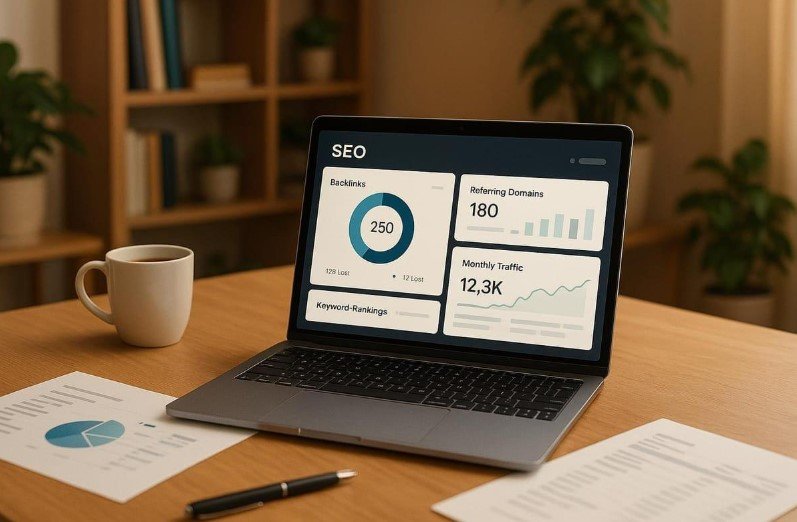
Once you have a list of potential websites, assess their suitability before contacting the publisher.
SEO metrics can help you organize your research, but no single metric proves that a backlink opportunity is valuable.
Check topical relevance
Read several recent articles and review the site’s main categories. Does the website consistently cover subjects connected to your client’s industry? Would a knowledgeable reader consider the proposed link useful in that context?
A relevant website with a smaller audience may be a better fit than a larger publication that rarely discusses the subject.
Review content quality
Look at the depth, accuracy, readability, and originality of published content. Check whether articles provide genuine value or appear to exist mainly to host links.
Watch for excessive low-quality guest posts, unrelated commercial topics, repetitive articles, and pages filled with unnatural outbound links.
One questionable article does not necessarily define an entire website, but repeated patterns deserve closer attention.
Examine organic visibility
Where data is available, review the site’s organic search visibility and the performance of relevant sections. Check whether its content appears to serve real search demand and whether important pages are indexed.
Traffic estimates from SEO tools are not exact measurements, so avoid making decisions based entirely on a single reported number.
Assess authority metrics carefully
Metrics such as Domain Rating (DR), Domain Authority (DA), and referring-domain counts can help compare websites within a research process. However, these metrics are created by third-party providers and are not direct Google ranking scores.
A high authority score cannot compensate for irrelevant content, questionable publishing practices, or an audience that has no connection to your client.
Check the editorial and linking practices
Review how the website handles external links. Are links placed naturally within useful articles? Does the publisher have clear contribution guidelines? Are sponsored or paid placements identified appropriately?
Google’s policies on link spam explain why links created primarily to manipulate rankings can create problems.
A sensible evaluation process looks at the complete website rather than relying on a single metric or an attractive price.
5. Look for Content Gaps You Can Help Fill
Finding a relevant publisher is only part of the process. You also need a credible reason for that publisher to reference your content.
Content gap research helps connect potential linking websites with resources that genuinely deserve attention.
Start by reviewing articles on relevant websites. Look for outdated information, unanswered questions, missing examples, or topics that could benefit from a more detailed explanation.
Then consider what your client can offer.
A software company might provide a practical calculator. An agency could publish a detailed industry checklist. A research-focused business might contribute original findings or expert commentary. A company with useful educational content could offer a guide that expands on a topic the publisher has already covered.
For example, if a publisher has an article explaining basic email marketing but lacks a section on measuring campaign performance, a well-researched resource on email analytics may be relevant.
The important distinction is that you are not simply looking for a place to insert a link. You are looking for a genuine connection between two useful resources.
This approach also makes outreach more specific. Instead of sending a generic message asking for a backlink, you can explain how your resource supports the publisher’s existing content.
6. Organize Your Backlink Prospecting Workflow
A structured workflow helps agencies manage prospecting consistently, especially when several clients have different niches, budgets, and campaign requirements.
A basic spreadsheet is enough to begin. Create columns for:
- Website URL and publisher contact
- Main niche and audience
- Relevant article or linking page
- Estimated organic visibility and authority metrics
- Editorial guidelines and link policies
- Opportunity type and potential content angle
- Quoted price, if applicable
- Outreach status and follow-up date
- Final decision and reason
Keep prospecting, outreach, and approved placements separate so your team can see which websites still need evaluation and which opportunities are ready for discussion.
It is also useful to record why a prospect was accepted or rejected. Over time, these notes help the team apply consistent standards and reduce repeated research.
For agencies handling multiple clients, organize opportunities by campaign rather than maintaining one undifferentiated list. A website suitable for a technology client may not be appropriate for a healthcare, finance, or home improvement project.
Before moving a prospect forward, confirm that it matches the client’s niche, target market, content requirements, and budget.
7. Turn Good Prospects Into Meaningful Outreach

A carefully researched prospect list is only useful if the team can approach publishers professionally.
Begin by identifying the appropriate contact. Depending on the website, this may be an editor, content manager, contributor coordinator, or website owner.
Keep the first message concise and relevant. Mention the website or article you reviewed, explain why your proposed resource fits, and make a clear request.
For example, you might contact a business publication after reading its guide to improving customer retention. If your client has a genuinely useful resource about customer feedback analysis, explain how it could complement the existing article.
Avoid mass-sending identical messages without checking the recipient or publication. Irrelevant outreach wastes time and can damage your sender reputation.
Follow-up messages should be polite and limited. If a publisher declines, respect that decision. If the publisher is interested, clarify the content requirements, placement terms, expected timeline, and any applicable disclosure requirements before proceeding.
For agency teams, a documented outreach process makes it easier to maintain quality across different campaigns while keeping communication clear for clients.
8. Choose the Right Backlink Opportunities, Not Just the Cheapest Ones
Budget matters, particularly when agencies manage campaigns for several clients. But the lowest quoted price does not necessarily represent the best opportunity.
Compare websites based on relevance, editorial quality, audience fit, placement context, and the terms offered by the publisher.
A reasonably priced placement on a genuinely relevant website may be more appropriate than a more expensive option with little topical connection. Equally, a high price or a strong third-party metric does not guarantee better results.
If a placement is paid, ensure the arrangement follows applicable search engine guidelines, including the appropriate treatment of sponsored links. Do not promise ranking improvements simply because a publisher offers a particular metric or placement type.
It is also worth comparing different approaches. A relevant existing article may provide an opportunity for a contextual link insertion, while a new guest article may be more suitable when the topic needs fresh, dedicated coverage.
The right choice depends on the publisher’s editorial standards, the client’s requirements, and the usefulness of the proposed content.
9. Measure the Results and Improve Your Process
Backlink prospecting should become more efficient as your team learns which opportunities are most suitable for its clients.
Track meaningful operational measures such as the number of relevant prospects identified, publisher response rates, approved opportunities, completed placements, and average cost per placement.
You can also monitor referring domains, changes in the visibility of supported pages, and relevant organic search trends over time. Remember that SEO outcomes have multiple causes, so avoid attributing every ranking change to one backlink.
Review the quality of completed placements as well. Check whether the article is live, the link points to the intended destination, and the page meets the agreed requirements.
Use these findings to refine your prospect criteria, improve outreach messages, and identify publishers worth building longer-term professional relationships with.
The purpose of measurement is not simply to report a larger number of links. It is to understand whether your process is delivering relevant, properly managed opportunities that support the client’s broader SEO strategy.
Final Thoughts
Finding high-quality backlink opportunities takes more than collecting domains with attractive authority metrics. It requires understanding the client’s goals, researching relevant publishers, reviewing content quality, and identifying a genuine reason for a link to exist.
A repeatable process makes this work easier to manage. Start with competitor research, expand your prospect list through relevant industry publications, evaluate each website carefully, and approach suitable publishers with a clear and useful proposal.
For SEO agencies, the challenge often becomes more complex when different clients need different niches, markets, turnaround times, and budgets.
Zenith Reach Agency supports agencies and businesses with guest posting, link insertions, publisher outreach, and link-building execution. Our outreach team contacts 150+ bloggers and website owners daily, helping us research opportunities across different projects. Availability and pricing depend on the client’s requirements and the publishers available for each campaign.
If your team needs support identifying and coordinating relevant publishing opportunities, contact Zenith Reach Agency to discuss your campaign requirements and explore suitable options.
The strongest prospecting process is not the one that produces the longest list. It is the one that consistently identifies relevant opportunities and gives publishers a genuine reason to engage.

Leave a Reply